
How Long Does Roof Leak Repair Take? Honest Timelines
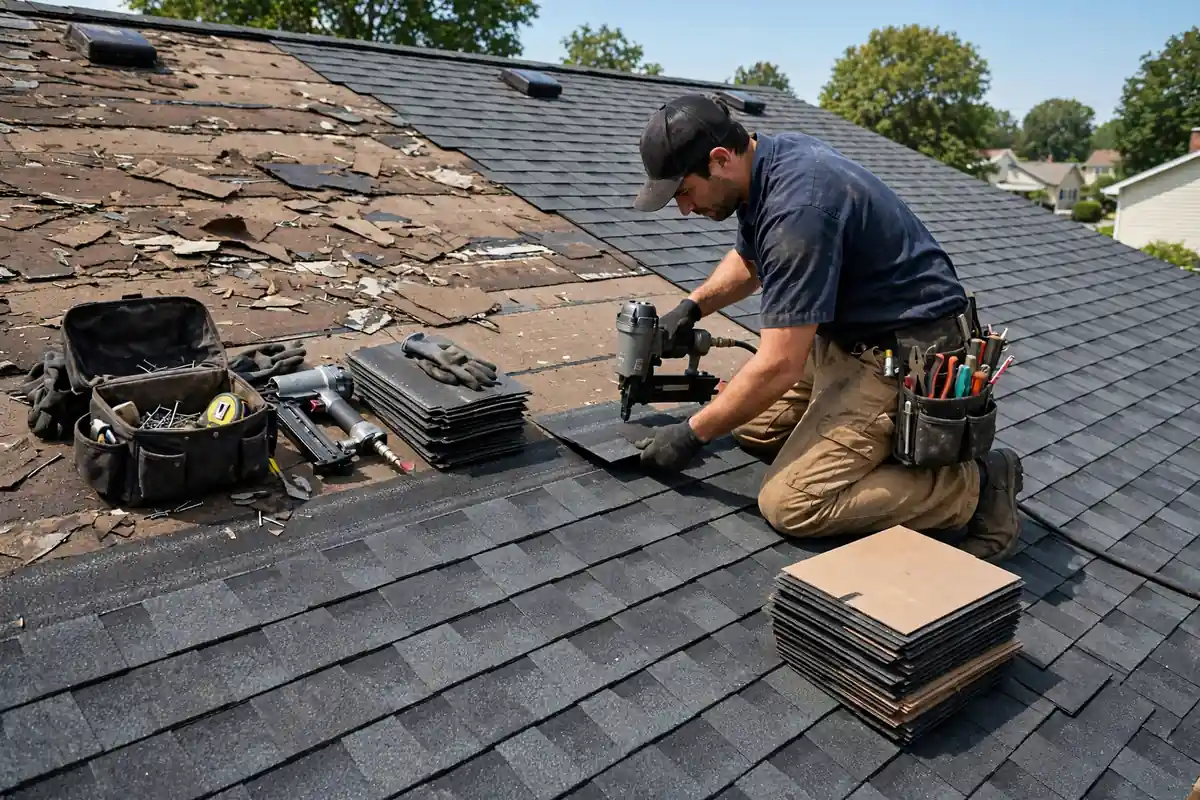
'How long will this take?' is the first question after 'how much will it cost?' — and the answer depends on what 'roof leak repair' actually means for your roof. Here are honest timelines for the repairs we do most around Severna Park, plus the factors that stretch a morning job into a multi-day project.
The quick jobs: under two hours. A single pipe boot replacement — the most common small leak fix in this area — takes 45 to 90 minutes including shingle release, deck check, new boot, and reset. Resealing a sound flashing joint, replacing a handful of wind-torn shingles, or re-securing a lifted ridge cap section are similar: the crew is typically on and off your roof in a morning. These are the jobs where bundling pays — that second aging boot or the suspicious flashing two slopes over adds minutes, not hours, when the crew and ladders are already up.
Half-day jobs: three to five hours. A skylight curb flashing rebuild, a chimney flashing repair on a straightforward chimney, or a medium shingle section replacement (a few square feet of wind damage) typically fills a morning or afternoon. These involve careful shingle release over a larger area, hand-cut metalwork, and water testing before closeout. Most homeowners are surprised that the 'small' chimney job takes half a day — the metalwork is precise, and rushing it is how leaks recur.
Full-day jobs: six to eight hours. Valley rebuilds with new wide metal and shingle reweaving, chimney flashing rebuilds that include cricket construction or crown work, and larger storm-damage sections fall here. Flat-roof membrane repairs with heat welding are usually full-day jobs too — the welding itself is methodical, and proper surface prep can't be rushed. A full day on site doesn't mean eight hours of hammering; it includes setup, protection of landscaping, the repair, water testing, and thorough cleanup.
Multi-day jobs: when the leak was ignored. Here's the timeline nobody wants: the leak that ran for two seasons now involves rotted decking, saturated insulation, and interior drywall and paint work. The roofing portion might still be a day, but deck replacement, structural drying, and interior restoration stretch the project across several days with drying time between. This is the real cost of waiting — not just money, but days of disruption. A stain you noticed in spring and 'kept meaning to call about' becomes a week-long project by fall.
What makes any job run long: steep slopes requiring full staging and harness work (everything is slower tied off); multiple shingle layers that must be peeled back to reach sound deck (common in Olde Severna Park's older homes); rotted decking discovered mid-repair — we stop, document, and requote rather than covering it up, which adds a decision cycle; weather interruptions, because shingle and membrane work can't proceed on wet surfaces; and material matching delays if your shingle color needs special order. A good estimate names these possibilities upfront instead of discovering them as surprises.
The emergency timeline is different. When water is actively entering, the first visit's goal is stopping the water — usually a tarp or membrane installation taking one to two hours. The permanent repair follows in a scheduled return visit once the roof is dry and safe. Don't confuse the two: anyone promising a full permanent repair on a soaked, storm-active roof is cutting corners on either safety or quality. The two-visit approach (emergency stop, then proper repair) is the professional standard, not upselling.
How to keep your job on the short end: call at the first stain, not the fifth — early leaks are small repairs. Clear the work area: move patio furniture, cars, and delicate plantings away from the eaves before the crew arrives. Keep pets and kids inside during the work. And decide promptly if mid-repair discoveries need your approval — the crew waiting on a callback burns daylight you pay for. Most of all, approve the full scope the diagnosis recommends: the 'just fix the one spot' approach on a roof with three related failures means three separate visits, three setups, and more total time than one comprehensive job.
When you call (888) 974-0663, describe the symptoms and we'll give you a realistic time window with the quote — not a vague 'we'll see.' And the crew's last task on every job, long or short, is the same: water-test the repair, clean the site, and walk you through what was done. A finished job should look like we were never there, except for the part that no longer leaks.
Related Services
Shingle Roof Leak Repair
Cracked, curled, or wind-torn shingles let water straight through to the deck. Our shingle roof leak repair in…
Pipe Boot Repair
The rubber boot around a plumbing vent pipe cracks in the sun, and suddenly every rain finds its way in. Our p…
Find Us
Dealing with a leak right now? Call (888) 974-0663 — our call representatives answer 24/7 for emergencies.