
Repair vs. Replace: How to Decide for a Leaking Roof
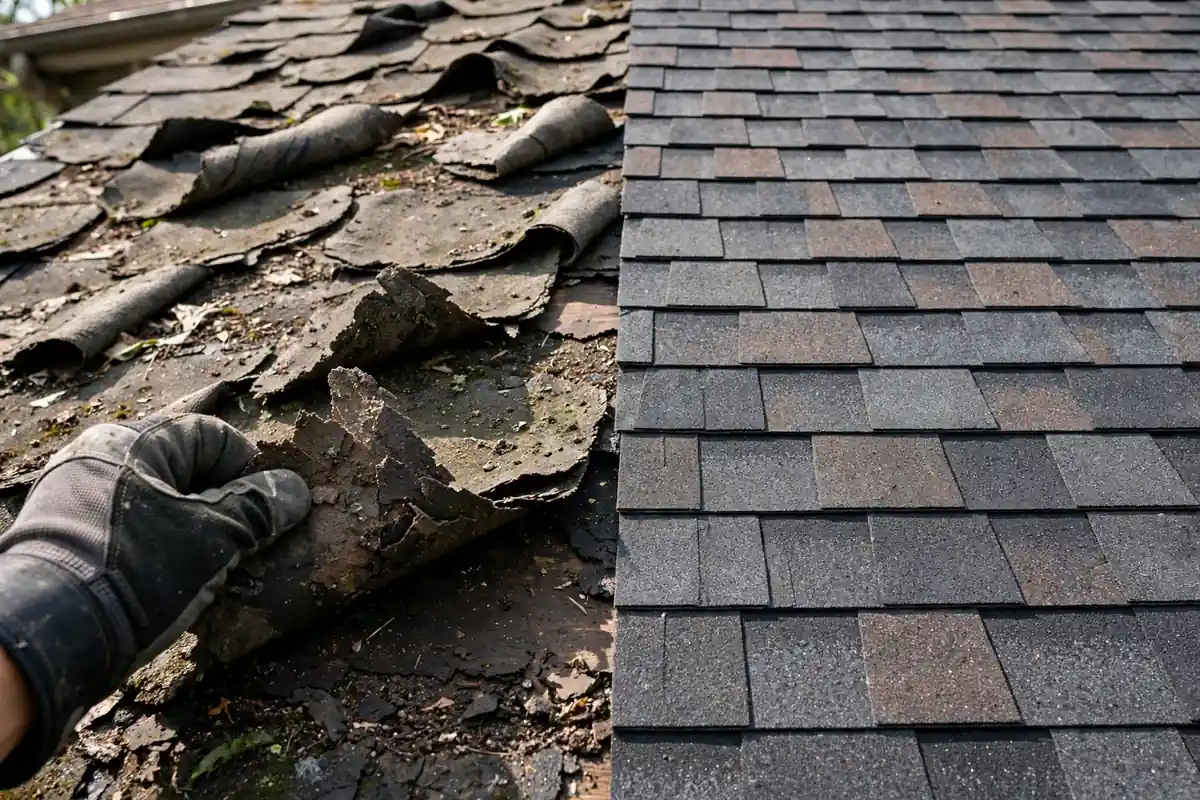
Every leaking roof eventually forces the same question: repair it or replace it? It's the highest-stakes decision in residential roofing — a repair costs a fraction of a replacement, but money spent repairing a dying roof is money wasted. Here's the framework for making the call honestly, whether you're talking to us or any other roofer.
Start with the roof's age versus its expected life. Architectural asphalt shingles — what most Severna Park homes wear — realistically last 20 to 28 years in Maryland's climate; 3-tab shingles, 15 to 22. If your roof is 12 years old with a failed pipe boot, that's a repair, full stop — the surrounding roof has a decade or more left. If it's 26 years old with brittle shingles and the valley is leaking, you're maintaining a roof that's already retired. Age alone doesn't decide, but it sets the context: repairs buy years on a mid-life roof and months on an end-of-life one.
Next, assess the field — the broad slopes away from the leak. Walk the perimeter with binoculars (or have the roofer's photos in hand) and look for the systemic signs: widespread granule loss (gutters full of sand-like granules), shingles that are curled, cupped, or clawed across whole slopes rather than in one spot, tabs that lift freely because the sealant strips have failed, and brittleness — shingles that crack instead of flexing. A leak in one valley on an otherwise healthy field is a repair. Leaks plus systemic field failure is a replacement wearing a repair's clothing.
Consider the leak's history. First leak ever on a 15-year-old roof? Repair it and move on. Third leak in two years, each in a different spot? That's the roof failing system-wide — each repair fixes one symptom while the underlying aging continues. We track this pattern constantly: the homeowner who pays for three $600 repairs in 18 months has spent nearly two grand and still owns a failing roof. At some point the honest advice flips, and a trustworthy roofer will tell you when you've reached it — even though the replacement is the bigger job they'd rather sell.
Do the math over five years. Add up the repair quote, then estimate the likely follow-on repairs: if the roof is 22-plus years old, budget for at least one more significant repair per year. Compare that five-year repair total against the replacement cost amortized over the new roof's 25-year life. Often the replacement wins on pure math — and that's before counting the interior-damage risk each future leak carries, the energy cost of a poorly ventilated old roof, and the resale value of a new roof with transferable warranty. But if the roof is mid-life and the failure is isolated, the repair wins easily. The math only works with honest inputs, which is why the field assessment comes first.
Factor in the hidden costs of waiting. A leaking roof doesn't just need roofing work — it damages what it touches. Saturated insulation loses R-value permanently and grows mold; rotted decking spreads beyond the original leak zone; interior drywall, paint, and flooring add up fast. A $700 flashing repair deferred for a year can become a $4,000 roofing-plus-interior project. When comparing repair versus replace, price the decision as of today — every season of delay adds to both columns, but it adds faster to the repair column because the damage compounds.
Watch for the replacement upsell — and the repair upsell. Both exist. The replacement upsell is the contractor who declares every 18-year-old roof 'at the end of its life' and pushes a full tear-off for what was a $500 boot job. The repair upsell is rarer but real: the contractor who happily sells you a third patch on a clearly finished roof because repairs are quick money. Your defense is the same against both: ask for the evidence. 'Show me the brittle shingles / the granule loss / the deck condition.' Photos don't upsell — they inform. Any roofer who can't show you why they're recommending what they're recommending hasn't earned the decision.
There are also legitimate middle paths. A phased approach — repair now, plan replacement in two to three years — makes sense when the roof is marginal but the budget isn't ready; the key is that it's a plan, not denial. Partial replacement (one slope) is occasionally valid when one slope faces brutal sun and the others are healthy, though matching and warranty get complicated. And sometimes the right answer is repair plus targeted upgrades: new flashing, ventilation improvements, or a coating that extends a sound roof's life meaningfully.
The decision framework in one paragraph: if the roof is under ~18 years old, the field is healthy, and the leak is isolated — repair. If the roof is over ~22 years, the field shows systemic aging, or leaks keep recurring in new spots — replace. In between, do the five-year math with honest inputs and photos. And whatever you decide, decide actively — the worst option is the non-decision of ignoring the leak until the choice is made for you by collapsing drywall.
If you're weighing this decision in Severna Park right now, call (888) 974-0663 for an assessment that shows you the roof's actual condition — age, field health, deck condition, and photos of all of it. We'll give you the repair price and tell you straight whether we'd spend it or save it toward replacement. That's the advice we'd want for our own homes.
Related Services
Shingle Roof Leak Repair
Cracked, curled, or wind-torn shingles let water straight through to the deck. Our shingle roof leak repair in…
Roof Leak Detection
Most roof leaks don't start where the stain appears. Our roof leak detection service in Severna Park, MD trace…
Find Us
Dealing with a leak right now? Call (888) 974-0663 — our call representatives answer 24/7 for emergencies.