
Seasonal Roof Leak Checklist for Severna Park Homes
Roofs don't fail on a schedule, but Maryland weather attacks them on one. Each season stresses your roof differently, and a fifteen-minute seasonal check — timed to what just happened and what's coming — catches the failures when they're small. Here's the year, season by season, for Severna Park homes.
Spring: assess winter's damage. Maryland winters bring freeze-thaw cycles that work at every nail hole, flashing joint, and sealant bead. In March or April, walk the perimeter with binoculars and look for: shingles that lifted over winter and never resealed (tabs that flutter or sit crooked), flashing that pulled away from walls or chimneys, and gutter sections that ice or snow load detached. Check the attic for new stains — winter leaks often show as faint marks that darken with spring rain. Clean the gutters of winter debris and the helicopters and pods of spring; clogged spring gutters overflow in April showers and rot fascia. This is also the ideal season to schedule any repair the winter revealed — roofers' schedules are saner than in storm season, and dry spring weather is perfect working conditions.
Summer: prepare for the violent months. Severna Park summers mean pop-up thunderstorms with driving rain and occasional microbursts — the exact conditions that exploit lifted shingles and weak flashing. Your early-summer check: confirm all shingle tabs are sealed (a hot day actually helps you — lift a tab gently; it should resist), verify pipe boots are still pliable (summer UV is what kills them — check for the first crazing cracks), and make sure attic ventilation is working (a superheated attic cooks shingles from below and shortens their life — if the upstairs is stifling, the roof is suffering). Trim back any branches touching the roof; summer storms turn touching limbs into abrasion and impact damage. If a tropical system is forecast, secure or store loose yard items that become projectiles — and know that post-storm, you'll do the perimeter check again.
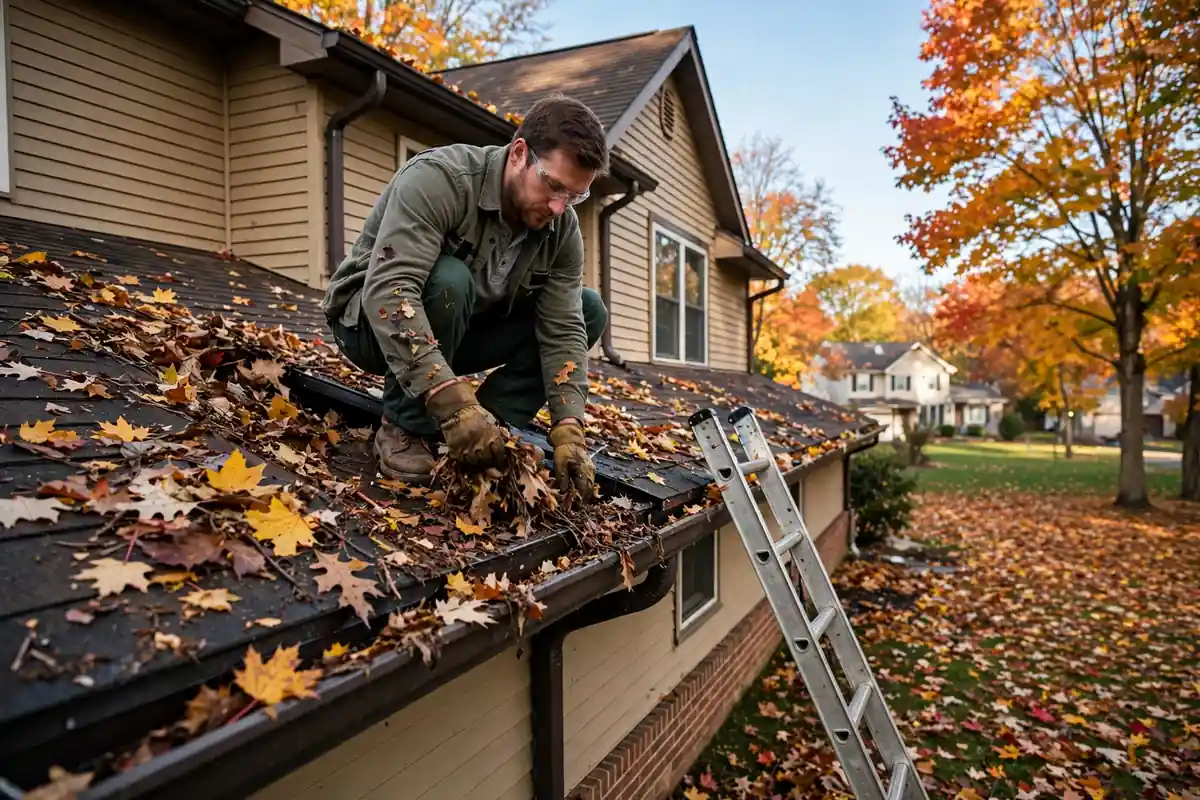
Fall: the critical clean. This is the most important seasonal task for Severna Park's tree canopy. After the leaves drop — usually late November — clear every valley, gutter, and downspout completely. Valleys packed with oak leaves and pine needles are the number-one preventable leak cause in wooded neighborhoods like Severna Forest; the debris dams water and rots metal all winter. While you're up there (or while the gutter cleaner is), check: drip edge condition at the eaves, gutter pitch (standing water in the gutter means it needs re-pitching before ice arrives), and downspout extensions that direct water away from the foundation. Fall is also the last comfortable window for repairs before winter — flashing work and shingle repairs done now are cured and settled before the first freeze.
Winter: monitor, don't climb. Winter roof work is for professionals with proper equipment — icy shingles are treacherous, and sealants don't cure properly in the cold. Your winter job is monitoring: after every significant snow or ice event, check the attic for new dampness (ice dams force water uphill under shingles — the stain appears below the eave line, a distinctive signature), watch for icicles concentrated in one spot (they mark heat loss and often precede ice-dam leaks), and keep gutters clear of ice buildup where safely reachable from the ground. If an ice dam is actively leaking, call for emergency help — (888) 974-0663, any time — rather than attacking it with a hammer or hot water, both of which damage roofs. The pro move for chronic ice dams is prevention planned in warmer months: air sealing, insulation, and ventilation fixes that keep the roof deck cold.
The year-round habits that matter most. Two are non-negotiable: keep a simple roof log — dates of inspections, what you saw, photos of anything suspicious — because leak diagnosis is pattern recognition, and patterns need records. And respond to the first sign, not the fifth: a new stain gets a look this week, not next season. Everything else is seasonal detail around those two habits. Homeowners who do the fifteen-minute checks and act on what they find spend a fraction on roofing over a decade compared to those who don't — not because their roofs are better, but because their problems are younger when found.
One more seasonal note specific to this area: the waterfront homes in Herald Harbor, Cypress Creek, Round Bay, and Pasadena's Lake Shore should add a post-nor'easter check to every season — wind off the water is harder on flashing and ridge caps than inland weather, and the salt air means metal condition deserves its own glance twice a year. Inland wooded homes trade that for the fall valley clean, which is non-negotiable under heavy canopy.
Put the four checks on your calendar now — April, July, late November, and January — and keep (888) 974-0663 in your phone for anything the checks turn up. Fifteen minutes a season is the cheapest roofing investment a homeowner can make.
Related Services
Drip Edge & Gutter Leak Repair
Water running behind the gutter or wicking back under the shingles rots fascia and leaks into walls. Our drip …
Roof Valley Leak Repair
Valleys carry the combined runoff of two roof slopes, so any weakness there leaks fast and big. Our roof valle…
Find Us
Dealing with a leak right now? Call (888) 974-0663 — our call representatives answer 24/7 for emergencies.