
Storm Damage Roof Leak Signs: What to Check After High Winds
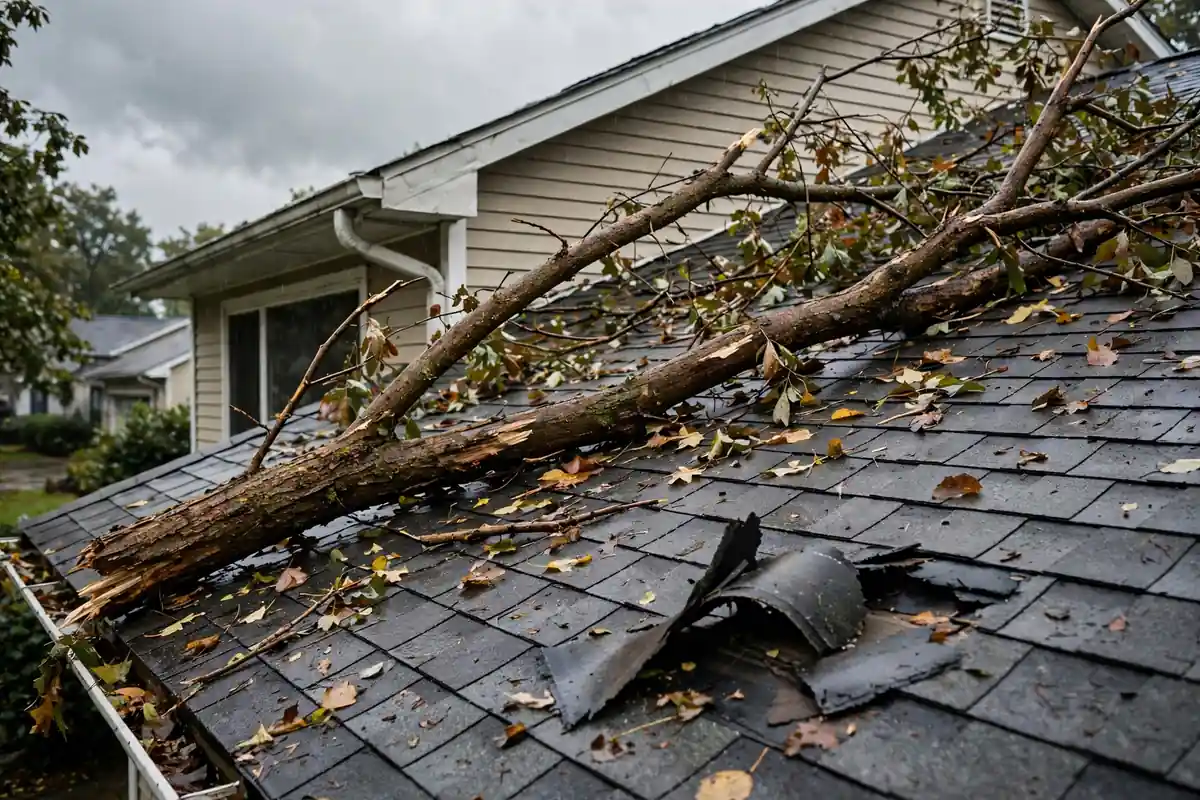
The morning after a big storm, every homeowner in Severna Park does the same thing: stands in the driveway, looks at the roof, and thinks 'looks fine.' Sometimes it is. But the storm damage that causes leaks months later — the creased shingle, the lifted seal, the cracked boot — almost never shows from the ground. Here's a systematic post-storm check that catches what the driveway glance misses.
Start on the ground, walking the full perimeter. Look for the obvious first: shingles or shingle pieces in the yard (bag them — they're evidence and color-match samples), displaced ridge caps visible along the peak, and gutters that are bent, detached, or full of granules. Granule piles at downspout outlets after a hailstorm mean the protective surface was knocked off — the shingles may look intact from below while their armor is gone. Check the siding and windows too: impact marks on siding at the roofline suggest debris hit the roof as well. Note the date, time, and what the storm did — wind direction and hail size matter for the insurance record if it comes to that.
Next, the binocular scan from the ground. Work slope by slope and look for: shingles that are lifted at the corners or creased horizontally (a creased shingle is a broken shingle, even if it's still attached — it will fail); missing tabs or bare patches; flashing that's visibly bent or displaced around chimneys and walls; and vents or boots that look tilted or damaged. Pay special attention to rakes (the sloped edges) and ridges — wind attacks edges first, and a lifted ridge cap lets water straight into the peak. If you see daylight through a lifted section, that's an active breach, not a future problem.
The attic check is the highest-value ten minutes you can spend. With a flashlight, and stepping only on joists, look for new wet spots on sheathing or rafters, drips, or damp insulation — especially on the windward side and below valleys. Storm damage often shows in the attic days before it stains a ceiling, because water has to saturate insulation and drywall before it becomes visible inside. If you find active dripping, place a container and note the location relative to roof features above; that triangulation is gold for the roofer. Don't go up during the storm or while lightning is possible.
Know the delayed signs — the ones that appear weeks or months later. A shingle that was creased but not torn will hold for a while, then its cracked mat lets water through in the next heavy rain. Sealant strips broken by wind uplift let tabs flutter; each flutter works the shingle looser until the next storm tears it off. Hail-bruised shingles lose granules gradually, then the exposed mat cracks. The pattern to watch: a leak that appears in the first heavy rain weeks after a storm, in a spot that never leaked before. That's delayed storm damage, and it's why the post-storm inspection matters even when everything looks fine.
What to document for insurance. If the storm was significant — named tropical system, documented microburst, hail — create a record before repairs: dated wide photos of each slope, close-ups of every damaged feature, photos of debris in the yard, and a written note of the storm's date and character. The National Weather Service archives storm data free, which corroborates your timeline. This documentation is what separates a clean claim from a disputed one, because adjusters need to distinguish storm damage from pre-existing wear — and that distinction is only possible with evidence from before the repair.
When to call a professional: any active leak (don't wait); visible structural damage like a limb through the roof or a collapsed section; damage you can't safely assess (steep slopes, high roofs, anything near power lines); and any situation where insurance might be involved — a professional damage survey with measurements and a written damage map is exactly what the claims process needs. Our storm damage inspections produce that documentation as a matter of course. Call (888) 974-0663 any time after a storm; call representatives answer 24/7, and post-storm triage prioritizes active leaks.
What not to do: don't climb onto a storm-damaged roof yourself — soft decking, hidden punctures, and hanging limbs make it the most dangerous time to be up there. Don't pressure-wash the roof to 'clean off' storm debris; the blast drives water under shingles and can void warranties. Don't let anyone talk you into a full roof replacement on the spot the day after the storm — storm-chasing contractors are a real phenomenon; get a local, documented assessment first. And don't sign anything with an insurance-focused contractor you don't fully understand — assignment-of-benefits paperwork has real consequences.
Severna Park's storm pattern — nor'easters, tropical remnants, summer microbursts — means this isn't a once-a-decade exercise. Make the post-storm perimeter walk a habit, know the delayed signs, and document before you repair. The roof you inspect after the storm is the roof that doesn't surprise you in the next one.
Related Services
Storm Damage Leak Repair
After a nor'easter or tropical system rolls through, the damage isn't always obvious from the ground. Our stor…
Emergency Roof Leak Repair
When water is coming in now, waiting is not an option. Our emergency roof leak repair service in Severna Park,…
Find Us
Dealing with a leak right now? Call (888) 974-0663 — our call representatives answer 24/7 for emergencies.