
What to Do When Your Roof Leaks: First 60 Minutes
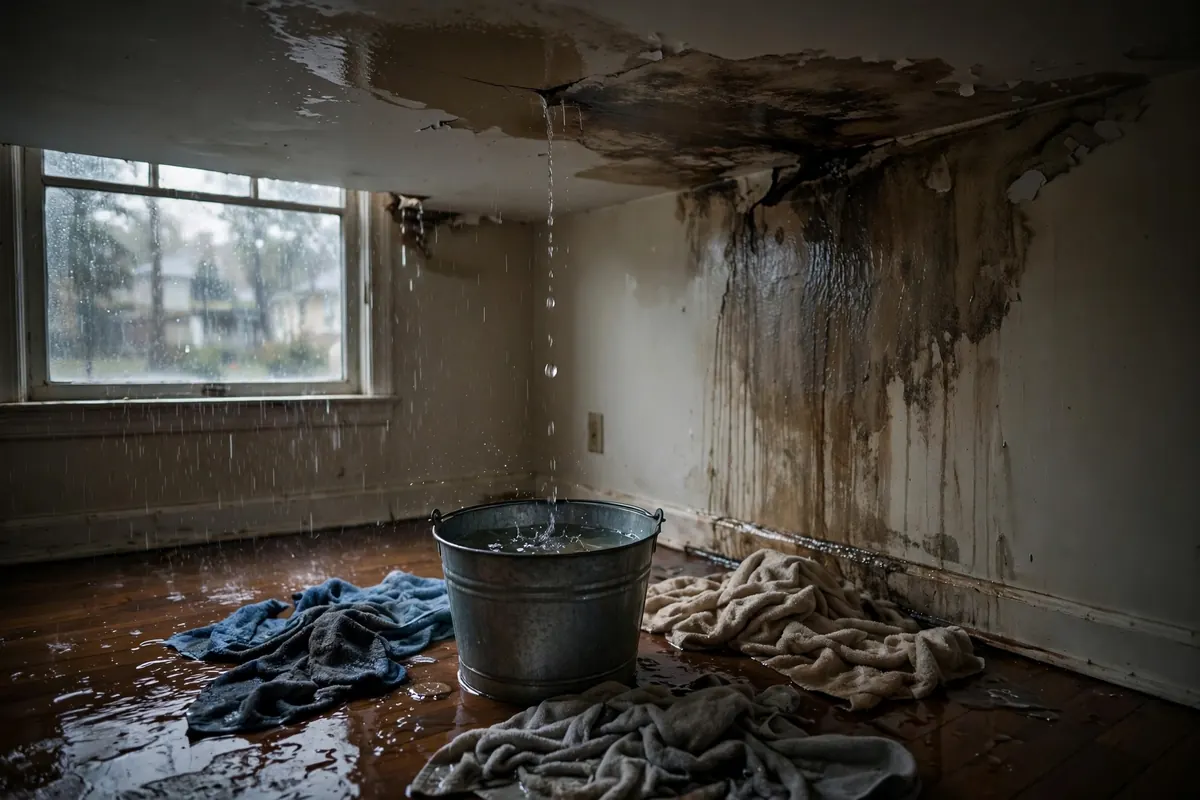
Roof leaks never happen at a convenient time. It's usually 11 PM during a thunderstorm, or you notice it when you get home from work to a spreading stain. Panic helps nothing; sequence helps everything. Here's what to do in the first sixty minutes, in order, based on what actually limits damage.
Minutes 0–10: protect people and property. Move furniture, electronics, rugs, and anything valuable out from under the drip — water spreads fast once drywall saturates. Put buckets or large pots under active drips, and lay towels around them to catch splash. If water is dripping near light fixtures, ceiling fans, outlets, or running down a wall with wiring, turn off the breaker for that circuit at the panel. Electricity and intruding water are the one combination that turns a leak into an emergency-room visit. Keep kids and pets out of the wet area.
Minutes 10–20: deal with a bulging ceiling. If a section of drywall is sagging or bulging with trapped water, it will eventually let go on its own — usually at 2 AM onto something expensive. A controlled release is better: place a large bucket directly underneath, then poke a small hole at the lowest point of the bulge with a screwdriver. Water will drain in a stream rather than a collapse. It feels wrong to poke a hole in your ceiling, but a small drain hole is a trivial drywall patch compared to a caved-in ceiling section.
Minutes 20–30: contain and document. Once drips are caught and the bulge is draining, photograph everything: the drip locations, the stains, the bulge, and any visible exterior cause you can see from a window. Note the time the leak started and what the weather is doing — steady rain, wind-driven, hail. This documentation matters twice: it helps the roofer diagnose faster, and it's the foundation of any insurance claim if the cause is storm damage. Don't throw away fallen shingles or debris you find in the yard; bag them as evidence.
Minutes 30–45: go to the attic if it's safe. With a flashlight, and stepping only on joists, try to see where water is entering. Often you can spot the drip's origin point on the sheathing or a rafter — mark it with chalk or tape. Place a bucket or tub under the attic drip to stop water from soaking insulation on its way down; wet insulation loses its R-value and grows mold. Do not go into the attic during an active lightning storm, and do not step on wet drywall — it won't hold you.
Minutes 45–60: call for help and plan the exterior. If water is actively entering, call a roofer that handles emergency leak calls — in Severna Park, call (888) 974-0663 any time; call representatives answer 24/7 for emergencies. Describe what you found: where the water shows, when it started, what the weather did, and what you saw in the attic. Do not climb onto the roof yourself during the storm or at night. A wet, dark roof is how homeowners get seriously hurt; the emergency crew carries tarps, lighting, and fall protection for exactly this situation.
What not to do in the first hour: don't start tearing into drywall looking for the leak's origin — you'll destroy the evidence trail and make the repair messier. Don't smear roofing tar or caulk on the roof in the rain — it won't bond to a wet surface and it makes the eventual proper repair harder. Don't put off the call because the drip slowed when the rain eased; the entry path is still open and the next storm will find it. And don't assume a small stain means a small problem — by the time water shows on a ceiling, it has already traveled through insulation, sheathing, and framing.
After the first hour, the job shifts from response to recovery. The emergency visit stops the water — usually with a secured tarp or membrane. Then, in daylight and dry conditions, the full diagnosis traces the leak to its true entry point for the permanent repair. Meanwhile, start drying: run fans and a dehumidifier in the affected area, and pull back any wet carpet or padding. Mold can start within 24 to 48 hours on soaked drywall and wood, so drying isn't cosmetic — it's structural. If drywall stayed wet for more than a day or two, plan on cutting out and replacing the affected section rather than just repainting the stain; paint over wet drywall is a mold sandwich.
The homeowners who fare best after a roof leak are the ones who acted in sequence: protect, contain, document, call. Every minute spent catching water and recording evidence in that first hour saves hours of repair and hundreds of dollars later. Keep this page bookmarked — you'll be glad you read it before you needed it.
Related Services
Emergency Roof Leak Repair
When water is coming in now, waiting is not an option. Our emergency roof leak repair service in Severna Park,…
Storm Damage Leak Repair
After a nor'easter or tropical system rolls through, the damage isn't always obvious from the ground. Our stor…
Find Us
Dealing with a leak right now? Call (888) 974-0663 — our call representatives answer 24/7 for emergencies.